Most woodworking injuries happen to beginners in the first year, and most of those injuries happen during familiar, routine tasks rather than complex operations. The pattern is consistent: a task is repeated many times without incident, attention drifts, and the cut or chisel push goes somewhere unintended. The practices described here address the conditions that make that drift more likely.
This article describes general safety considerations and is not a substitute for hands-on instruction from a qualified woodworking educator.
Personal Protective Equipment
Safety glasses are the non-negotiable item. Chips, splinters, and dust travel in unpredictable directions when hand tools contact wood. Canadian Standards Association (CSA) Z94.3 specifies the requirements for eye protection used in workshop environments. Glasses meeting this standard are labelled with a "Z87+" or CSA mark and are sold at most Canadian hardware retailers.
Hearing protection is less critical for hand-tool work than for power tools, but a shop vac or dust collector running for extended periods exceeds safe exposure thresholds. Disposable foam ear plugs rated NRR 29 are adequate and inexpensive.
Dust masks protect against fine particles generated during sanding. An N95 respirator (or P100 for oil-based finishing) filters particles that a simple dust mask does not capture. Wood dust from species such as western red cedar, which is common in British Columbia, is classified as a sensitizer — repeated exposure without protection increases the likelihood of an allergic response over time.
Sharp Tool Handling
Sharp tools are paradoxically safer than dull ones. A sharp chisel or plane iron cuts predictably with controlled pressure. A dull tool requires more force, which means that when it does slip or catch, the consequence is worse. This is the consistent finding in hand-tool woodworking literature and is one reason sharpening technique is covered before joinery in most structured curricula.
When moving a sharp chisel across the bench, always keep the edge pointed away from the body and hands. When not in use, set the chisel down with the edge facing away from the workspace edge and never hanging over the bench side. A chisel dropped edge-down onto a concrete floor is damaged at minimum, and a danger at worst.
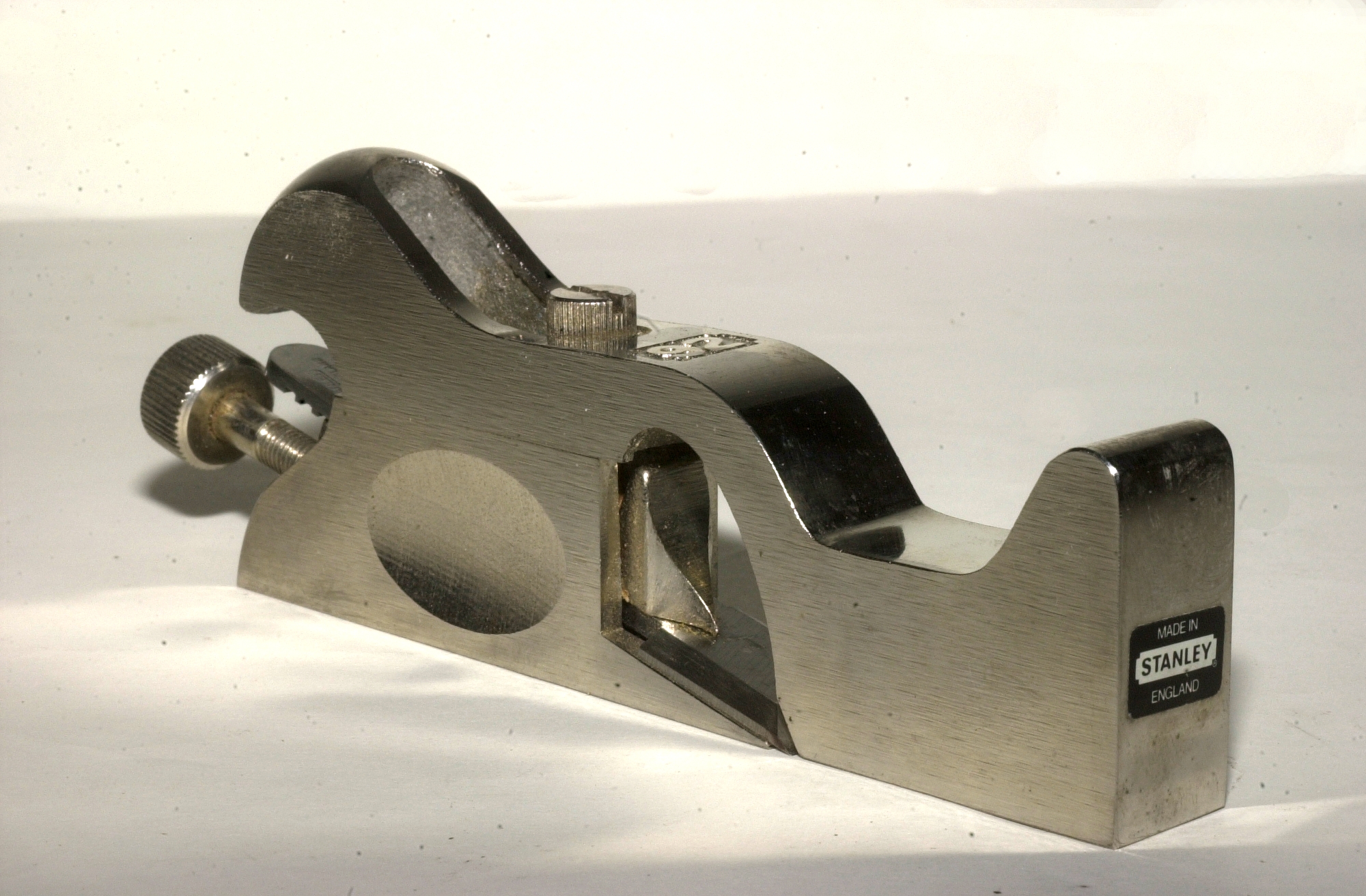
Plane irons should be retracted into the body before a plane is set down on the bench. The standard practice is to place the plane on its side so the blade does not contact the bench surface.
Body Positioning
Body position determines whether a tool slip leads to a minor near-miss or an injury. The relevant principle is keeping body parts out of the path of any tool in the event that the tool moves further than intended.
When paring with a chisel, the thumb of the guiding hand often acts as a depth stop. The thumb should be behind the cutting edge, not in front of it. The guiding hand stabilises the chisel against lateral movement while the striking hand provides push — once the guiding hand is in the tool's path, there is no margin for error on the force side.
When sawing, the free hand should be clear of the kerf line. An index finger or thumb extended to guide the saw at the start of a cut should be withdrawn before the saw reaches full depth in the wood.
Securing Work
A workpiece that moves during a cut creates unpredictable tool behaviour. In hand-tool work, the workbench vise, bench dogs, holdfasts, and F-clamps are all methods for securing stock. The appropriate method depends on the operation.
For edge planing, clamp the board vertically in the face vise with its end supported by the bench shoulder. For paring across end grain, clamp horizontally with the bench dog or a holdfast. For chopping mortises, a holdfast at each end of the board is more stable than a single clamp in the middle.
Never hold stock against a stop while chiselling toward your hand. The stop is behind the work; the hand should be to the side of or behind the cut direction, not in the line of travel.
Fire Prevention
Oil-soaked rags are a spontaneous combustion hazard that causes workshop fires every year. Linseed oil in particular generates heat as it cures; rags left bundled in a pile after applying an oil finish can reach ignition temperature within hours. After use, oil-soaked rags should be laid flat and spread apart on a non-combustible surface outside until fully dry, or submerged in water inside a metal container with a lid and disposed of appropriately.
Solvent containers (mineral spirits, naphtha, acetone) should be stored in a metal cabinet designed for flammable liquid storage. Canadian fire codes in most provinces require this for quantities above 10 litres in an attached garage or basement. A dry chemical fire extinguisher rated for Class B fires should be mounted within reach of the finishing area, not at the room exit — if a fire starts, access to the exit should not require passing through the fire.
Dust Management
Fine wood dust (particles smaller than 10 microns) remains suspended in air for extended periods and presents both respiratory and explosion hazard at high concentrations. In hand-tool workshops, explosive concentrations are unlikely, but respiratory exposure from sanding is cumulative over years of work.
Regular sweeping with a stiff brush rather than a leaf blower avoids resuspending settled dust. A shop vacuum with a fine-dust cartridge filter captures particles more effectively than a standard vacuum bag. Empty the canister before it reaches two-thirds full to maintain suction.
First Aid Readiness
A first aid kit stocked for a workshop environment should include sterile gauze pads, medical tape, nitrile gloves, wound closure strips, and a CPR face shield. Cuts in woodworking are usually shallow — sustained direct pressure for 10–15 minutes handles the majority of hand and finger cuts. If bleeding does not slow after 15 minutes of direct pressure, or if the cut is deep enough to expose underlying tissue, seek medical attention.
Eye injuries from wood chips or dust should be flushed with clean water for at least 15 minutes, then assessed by a medical professional. Do not rub the eye. Canadian Tire and most pharmacies carry portable eyewash stations rated for workplace use.
In Ontario, first aid requirements for workplaces are governed by the Ontario Regulation 1101 under the Workplace Safety and Insurance Act. For home workshops, the standards are not legally binding but provide useful guidance on minimum kit contents.